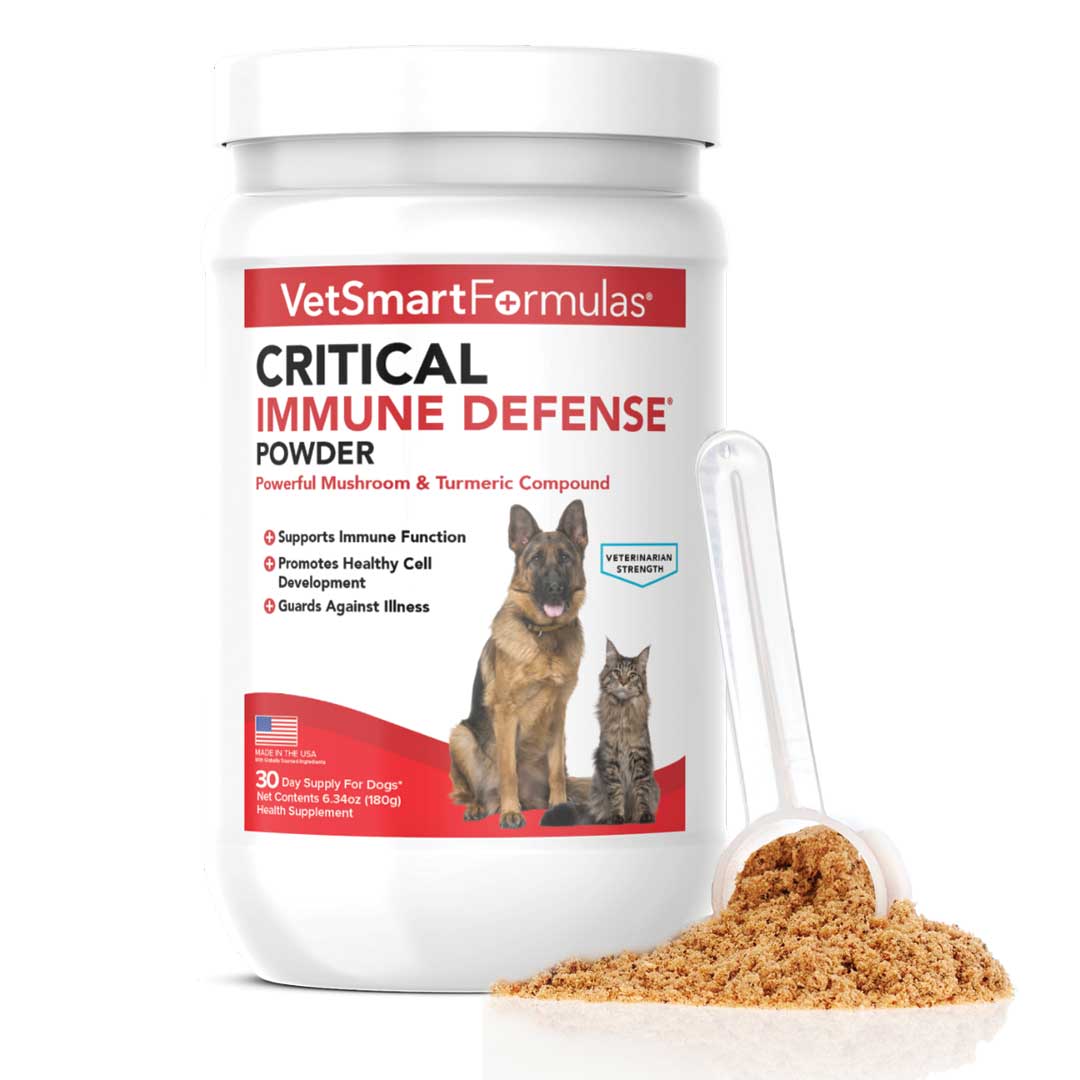
Critical Immune Defense combines four medicinal mushrooms (Turkey Tail, Reishi, Shiitake and Maitake) with milk thistle, a bioavailability-enhanced turmeric extract and antioxidant nutrients. Below is the independent, peer-reviewed research on those ingredients, with the species each study was carried out in. It is the same research we send to veterinarians who ask.
Turkey Tail mushroom (polysaccharopeptide, PSP)
Turkey Tail is the most studied medicinal mushroom in dogs. Researchers at the University of Pennsylvania tested a Turkey Tail polysaccharopeptide in dogs with splenic hemangiosarcoma and reported a dose-related delay in the spread of the disease. A larger follow-up study in 101 dogs did not find a survival benefit when the same compound was added to chemotherapy. We cite both, because that is the honest state of the evidence: Turkey Tail is an immune-modulating ingredient with real canine research behind it, not a cancer treatment. In people, a Cochrane review and a meta-analysis of 23 trials found Turkey Tail and Reishi products used alongside standard cancer care were linked to modest survival and immune-cell benefits.
Research:
- Brown & Reetz (2012). Single agent polysaccharopeptide delays metastases and improves survival in naturally occurring hemangiosarcoma. Evid Based Complement Alternat Med. Study population: Dogs (15; splenic hemangiosarcoma). PubMed
- Gedney (2022). Evaluation of the anti-tumour activity of Coriolus versicolor polysaccharopeptide (I'm-Yunity) alone or in combination with doxorubicin for canine splenic hemangiosarcoma. Vet Comp Oncol. Study population: Dogs (101; splenic hemangiosarcoma). PubMed
- Pilkington (2022). Coriolus (Trametes) versicolor mushroom to reduce adverse effects from chemotherapy or radiotherapy in people with colorectal cancer. Cochrane Database Syst Rev. Study population: Humans (colorectal cancer RCTs). PubMed
- Zhong (2019). Coriolus Versicolor and Ganoderma Lucidum Related Natural Products as an Adjunct Therapy for Cancers: A Systematic Review and Meta-Analysis of Randomized Controlled Trials. Front Pharmacol. Study population: Humans (23 RCTs, 4,246 patients). PubMed
Reishi, Shiitake and Maitake mushrooms
Mushroom beta-glucans are the compounds behind most of the immune research. In a 2024 trial, 32 healthy dogs fed fungal beta-glucans showed higher neutrophil phagocytic activity, a measure of first-line immune response. A dose-response study in 40 beagles found Reishi increased phagocytic activity at the higher dose tested. Shiitake powder raised antioxidant enzyme activity in healthy dogs, and a shiitake-derived extract (AHCC) reduced parasite load over two years in a randomized, placebo-controlled trial in dogs with leishmaniosis. A 2026 feeding trial found a Turkey Tail and Reishi blend was well tolerated in cats and shifted gut metabolites, though immune markers were mostly unchanged.
Research:
- de Souza Theodoro (2024). Beta-glucans from Euglena gracilis or Saccharomyces cerevisiae effects on immunity and inflammatory parameters in dogs. PLoS One. Study population: Dogs (32 healthy). PubMed
- Kayser (2024). Functional properties of Ganoderma lucidum supplementation in canine nutrition. J Anim Sci. Study population: Dogs (40 adult beagles). PubMed
- Kusaba (2024). Shiitake mushroom powder supplementation increase antioxidative activity in dogs. Front Vet Sci. Study population: Dogs (healthy). PubMed
- Miró (2024). New immunomodulatory treatment protocol for canine leishmaniosis reduces parasitemia and proteinuria. PLoS Negl Trop Dis. Study population: Dogs (client-owned, leishmaniosis). PubMed
- Wang (2026). Effects of a mushroom-based beta-glucan and bovine colostrum blend on the gastrointestinal health and immune function of healthy adult dogs. J Anim Sci. Study population: Dogs (20 healthy beagles). PubMed
- Broughton (2026). Effects of a mushroom-based beta-glucan blend on the gastrointestinal health and immune function of healthy adult cats. J Anim Sci. Study population: Cats (20 healthy adults). PubMed
- Fries-Craft (2023). Dietary yeast beta 1,3/1,6 glucan supplemented to adult Labrador Retrievers alters peripheral blood immune cell responses to vaccination challenge without affecting protective immunity. J Anim Sci. Study population: Dogs (24 adult Labradors). PubMed
Milk thistle (silymarin and silybin)
Milk thistle is included for liver and antioxidant support, which matters most for pets on long-term medication or chemotherapy. In a randomized trial in dogs with cancer, silybin (with SAMe) reduced the rise in liver enzymes caused by the chemotherapy drug lomustine. Silybin lowered liver enzymes in healthy dogs and in dogs with liver disorders, and the ACVIM consensus statement on canine chronic hepatitis describes silymarin's antioxidant, anti-inflammatory and anti-fibrotic actions. A 2023 review covers its use in both dogs and cats.
Research:
- Skorupski (2011). Prospective randomized clinical trial assessing the efficacy of Denamarin for prevention of CCNU-induced hepatopathy in tumor-bearing dogs. J Vet Intern Med. Study population: Dogs with lymphoma, mast cell tumor or histiocytic sarcoma on CCNU. PubMed
- Gogulski (2021). Effects of silybin supplementation on nutrient digestibility, hematological parameters, liver function indices, and liver-specific mi-RNA concentration in dogs. BMC Vet Res. Study population: Dogs. PubMed
- Giannetto (2022). Antioxidant and Hepatoprotective Effect of a Nutritional Supplement with Silymarin Phytosome, Choline Chloride, l-Cystine, Artichoke, and Vitamin E in Dogs. Antioxidants (Basel). Study population: Dogs. PubMed
- Webster (2019). ACVIM consensus statement on the diagnosis and treatment of chronic hepatitis in dogs. J Vet Intern Med. Study population: Dogs (consensus). PMC
- Tedesco & Guerrini (2023). Use of Milk Thistle in Farm and Companion Animals: A Review. Planta Med. Study population: Dogs and cats (review). PubMed
Turmeric extract (curcumin)
Curcumin has a large laboratory literature on antioxidant and inflammatory-response pathways; what matters for pets is absorption, which is why this formula uses a bioavailability-enhanced white turmeric extract. In cats, a 2026 randomized trial found curcumin added to standard care improved kidney and antioxidant markers in cats with chronic kidney disease, and a four-month tolerance study found a turmeric extract safe in healthy cats. In dogs, curcuminoids reduced a marker of oxidative stress in diabetic dogs, and a 2026 trial found a turmeric extract eased osteoarthritis signs. A University of California, Davis pilot study showed curcumin can be given safely to dogs with cancer but did not shrink tumors, which is why we do not make that claim.
Research:
- Ilgun (2026). Renoprotective effects of curcumin in cats with chronic kidney disease. J Vet Intern Med. Study population: Cats (16 client-owned, IRIS stage 3 CKD). PubMed
- Raynaud (2026). A Tolerance Study of Turmeric Extract in Healthy Adult Cats. Animals (Basel). Study population: Cats (healthy adults). PubMed
- Suemanotham (2022). Curcuminoid supplementation in canine diabetic mellitus and its complications using proteomic analysis. Front Vet Sci. Study population: Dogs (6 diabetic, 12 healthy). PubMed
- Tripathi (2026). Protective effects of turmerosaccharides rich extract of Curcuma longa L. in osteoarthritic dogs. Front Vet Sci. Study population: Dogs (20 with osteoarthritis). PubMed
- Withers (2018). In vitro and in vivo activity of liposome-encapsulated curcumin for naturally occurring canine cancers. Vet Comp Oncol. Study population: Dogs (10; cancer). PubMed
- Moritz (2026). In vitro effects of apigenin, curcumin, and fumaric acid on intracellular ROS and TNF-alpha responses in Escherichia coli-stimulated canine PBMCs. Front Vet Sci. Study population: Canine blood mononuclear cells. PubMed
Vitamin E, selenium, vitamin C, CoQ10 and vitamin A
These nutrients support the antioxidant system that mushrooms and curcumin act on. Vitamin E and selenium together enhanced lymphocyte and phagocyte activity in adult cats. Organic selenium raised antioxidant enzymes and lymphocyte proliferation in puppies, and a systematic review summarises selenium's role in canine immunity. Diets with added vitamin E, vitamin C and beta-carotene improved antioxidant status in both dogs and cats, and beta-carotene (the vitamin A precursor) restored age-related declines in T-cell response in older dogs. CoQ10 supplementation changed inflammatory and lymphocyte measures in a controlled study in dogs.
Research:
- O'Brien (2015). Moderate dietary supplementation with vitamin E enhances lymphocyte functionality in the adult cat. Res Vet Sci. Study population: Cats (adult). PubMed
- Shao (2021). Supplemental Dietary Selenohomolanthionine Improve Antioxidant Activity and Immune Function in Weaned Beagle Puppies. Front Vet Sci. Study population: Dogs (30 weaned beagle puppies). PubMed
- Zentrichova (2021). Selenium and Dogs: A Systematic Review. Animals. Study population: Dogs (systematic review). PubMed
- Jewell (2024). Effect of dietary antioxidants on free radical damage in dogs and cats. J Anim Sci. Study population: Dogs (40) and cats (40). PubMed
- Massimino (2003). Effects of age and dietary beta-carotene on immunological variables in dogs. J Vet Intern Med. Study population: Dogs (36 young and old). PubMed
- Hall (2011). Influence of dietary antioxidants and fatty acids on neutrophil mediated bacterial killing and gene expression in healthy Beagles. Vet Immunol Immunopathol. Study population: Dogs (50 adult beagles). PubMed
- Druzhaeva (2022). Effects of Coenzyme Q10 Supplementation on Oxidative Stress Markers Inflammatory Markers Lymphocyte Subpopulations and Clinical Status in Dogs with Myxomatous Mitral Valve Disease. Antioxidants. Study population: Dogs (MMVD). PubMed
For veterinarians
The full veterinary research overview for Critical Immune Defense, including label amounts per scoop, weight-based dosing and an evidence hierarchy for each ingredient, is available on request. Two points deserve emphasis in professional discussion. First, the Turkey Tail evidence is mixed: the 2012 pilot (n=15) was encouraging and the 2022 prospective study (n=101) found no survival benefit from adding PSP to doxorubicin, with a sex-dependent effect. Second, curcumin bioavailability varies widely between preparations, so results from liposomal or dietary curcumin cannot be assumed to transfer. The finished product has not been evaluated in a controlled trial. Wholesale for clinics is available through Vetcove.
About this research
Critical Immune Defense is a nutritional supplement, not a drug. The studies above were conducted by independent researchers on individual ingredients, not on the finished VetSmart Formulas product, and are provided so that pet owners and veterinarians can read the evidence for themselves. Results in one species or preparation do not guarantee the same result in another. This information is not intended to diagnose, treat, cure or prevent any disease. If your pet has a diagnosed condition or takes medication, talk to your veterinarian before adding a supplement.